


Heroin is a highly addictive opiate drug. Heroin users usually inject, snort, or smoke the drug, which gives the feeling of intense euphoria.[1]
The temporary high that heroin gives people comes at a high price. Ongoing heroin use can quickly lead to dependence, and withdrawal from heroin is excruciating. Withdrawal from heroin is often so debilitating and uncomfortable that users usually keep using the drug to avoid it–even as the harm caused by their addiction consumes their lives.
People using heroin must seek treatment as soon as possible. Without treatment, heroin addiction can cause devastating consequences for a person’s mental, physical, and social health. While actively using heroin, people may experience uncomfortable physical symptoms like nausea, sweating, itching, confusion, and drowsiness.
After an extended period of use, people may suffer severe physical health conditions, such as heart, brain, and liver damage. Heroin abuse can quickly become life-threatening due to the risk of overdose and extreme damage to your body. Heroin users are also more prone to accidents and injuries and are up to 20 times more likely to die than those who do not use heroin.[2]
If you use heroin or are concerned that a loved one might be, you must get help as soon as possible. Most people require heroin rehab to wholly and safely detox from the drug and learn how to function without it. Recognizing common signs of heroin abuse can help you realize that you or your loved one has a problem. It can be the first step in helping someone who is addicted to heroin get life-saving addiction treatment.
Contact the Woburn Addiction Treatment specialists today for more information about starting heroin rehab in Massachusetts.

10 Signs Someone Needs Heroin Rehab
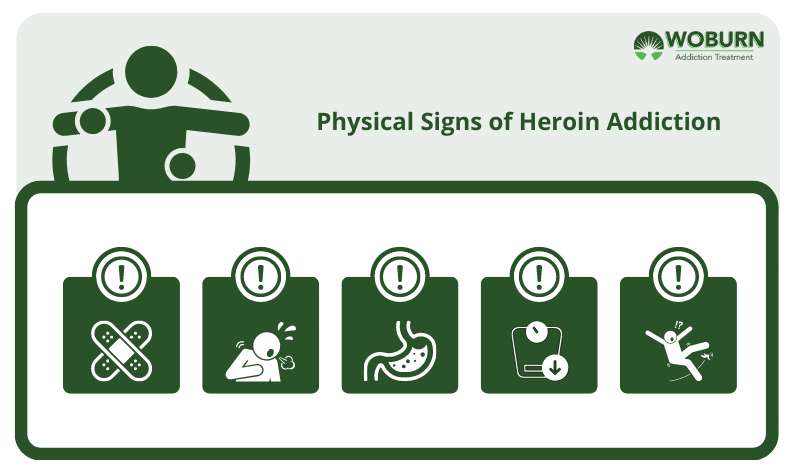
Physical Signs of Heroin Addiction
Heroin can wreak havoc on a person’s physical health after prolonged use. But even in the short term, you might notice some clear physical signs of heroin addiction.
1. Marks or scars from injecting or smoking heroin. Heroin users may have burns on their fingers or face from smoking heroin or scars and marks on their arms from repeatedly injecting it.
2. Lung or breathing problems. A person who uses heroin may experience repeated bouts of pneumonia or a persistent cough.
3. Gastrointestinal problems. Constipation is a significant discomfort for many people who habitually use heroin. Long, frequent trips to the bathroom may be common.
4. Weight loss. The person may have a sudden, sometimes severe reduction in their weight. Weight loss will likely be quick and unintentional.
5. Poor coordination. The person may be either drowsy and sedated or keyed up and jittery. Clumsiness is common.
You may notice constricted pupils in a person who uses heroin. They may also struggle to hold a conversation or even stay awake.
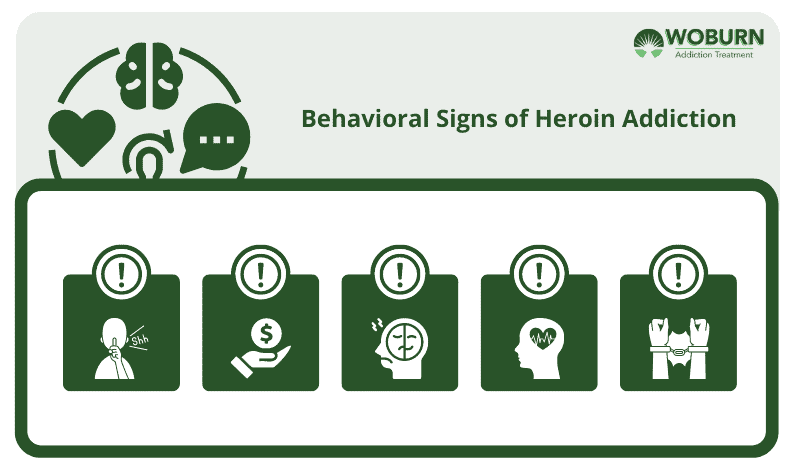
Behavioral Signs of Heroin Addiction
Heroin addiction and abuse can cause dramatic changes in the way a person behaves. These changes may be very obvious or more subtle. Here are some common behavioral signs you need heroin rehab.
1. Secretive behavior. People living with addiction often become secretive. They may lie about their drug use or take steps to cover it up. They may isolate themselves to avoid having others discover their heroin use, wear clothing to cover up injection marks or weight loss and lie to friends and family to get money.
2. Financial problems. People who were once responsible with money may suddenly have serious financial difficulties. They may drain savings accounts, sell valuables, or steal from others to get money to buy heroin.
3. Mood swings. People may have frequent, drastic shifts in their mood, ranging from energetic euphoria to depression and irritability.
4. Mental health symptoms. A person who uses heroin might have new or worsening mental health symptoms, including depression and hallucinations.
5. Legal trouble. People may engage in illegal activities to get the money to buy heroin.
Sudden, drastic changes in a person’s behavior may signify that they are living with substance abuse or addiction. If you notice any of these behavioral signs of heroin abuse, consider seeking treatment from a comprehensive heroin rehab facility.

Check Insurance
We Accept Most Insurance
We are available 24 hours a day, 7 days a week to help you or your loved one understand your insurance coverage. 100% confidentiality guaranteed.
How to Recognize Someone is Addicted to Heroin
Recognizing heroin addiction can be complicated depending on how close you are to the person in question. You may be able to spend time with them and watch for behavioral signs, or you might be able to see physical changes. Some signs, such as scars or injection marks, may be obvious, while behavioral changes may be more subtle, especially at first. It can be challenging to determine if a person needs heroin rehab because users are often secretive or isolative.
If you know the signs, you might recognize the problem and be able to help your loved one get the help they need.
What Should You Do If You Recognize These Signs?
If you notice one or more of the signs listed above in yourself or a loved one, it is important to take action promptly. Early recognition increases the chances of successful treatment and reduces the risk of severe health consequences, including overdose.
- Assess safety and severity – Determine whether the person is at immediate risk of harm, such as signs of overdose (slow breathing, blue lips, unconsciousness). If so, seek emergency medical help right away.
- Speak openly and without judgment – Honest, compassionate conversations can increase the likelihood that someone will accept help. Avoid blame and focus on concern and care.
- Connect with professionals – Contact a qualified addiction specialist or treatment provider who can explain options such as medically supervised detox, inpatient, or outpatient rehab.
- Use support systems – Family support, community groups, and peer recovery networks can make a significant difference in sustaining recovery.
Taking these steps helps ensure that recognizing the signs of heroin addiction leads to meaningful support and treatment rather than uncertainty or delay.
Understanding Why Professional Treatment Matters
Heroin addiction is not simply a matter of willpower or personal choice; it is a chronic brain disease that affects the reward and decision-making centers of the brain. Heroin’s potent effects can quickly create physical dependence and intense cravings, making it extremely difficult for individuals to stop using on their own without support.
Professional addiction treatment provides structured care that addresses both the physical and psychological aspects of heroin use disorder. Medically supervised detox can safely manage withdrawal symptoms, which can be severe and uncomfortable, while evidence-based therapies such as cognitive behavioral therapy (CBT) and motivational interviewing help individuals understand the underlying triggers and develop coping skills.
Moreover, comprehensive rehab programs often include ongoing monitoring, support groups, and aftercare planning to reduce the risk of relapse and promote long-term recovery. Recognizing the signs of addiction is the first step, but connecting with skilled clinicians and a supportive treatment environment significantly improves the likelihood of sustainable recovery and quality of life.
Find a Heroin Rehab in Massachusetts Today
At Woburn Addiction Treatment, we can help you start your recovery by connecting you with a local heroin detox center and then helping you transition to one of our comprehensive treatment programs. For information about heroin rehab in Massachusetts or to learn more about getting started in other substance abuse treatment programs, contact the Woburn Addiction Treatment specialists today.
References:


