

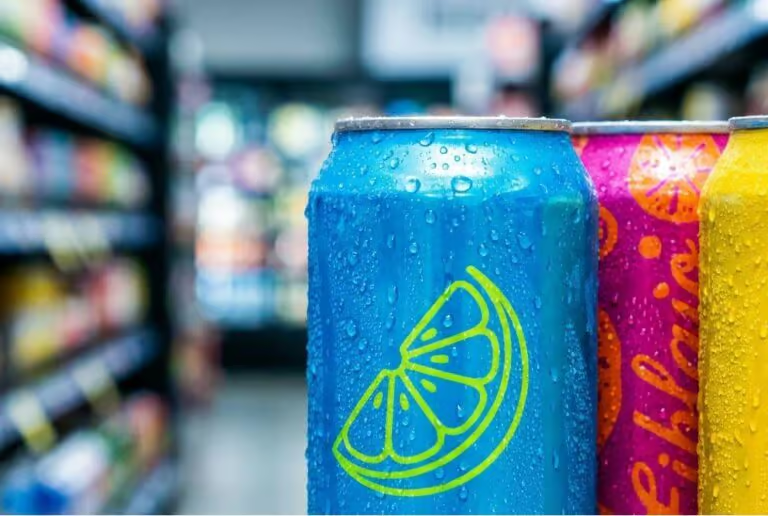
You might have passed a refrigerator in your local gas station or vape shop, eye-catching cans stacked inside, the words “wellness tonic” or “alcohol alternative” swirling across glossy labels. The packaging is slick and modern, promising a fresh take on feeling good, but behind the bright designs lies something far more complicated. What’s actually in these kratom drinks, and why do they seem to be everywhere all at once? Before you pop the tab, it’s worth knowing that, beneath the surface, these drinks can carry hidden risks that deserve your attention, especially when it comes to their addictive potential and how they may really impact your health.
Energy Drinks with Kratom
Energy drinks with kratom have become more common in convenience stores, often marketed as a quick way to boost energy and focus. These kratom energy drinks combine kratom extract from a kratom plant, also known as mitragyna speciosa, with caffeine or other stimulants to create a more intense kratom experience. Kratom energy drinks and other kratom beverages are often sold as ready-to-drink options, including kratom seltzers, kratom tea, and flavored drinks designed for convenience. While traditional kratom has historically been consumed as tea made from kratom leaves in Southeast Asia, newer kratom products now include kratom powder, kratom extract, and kratom-infused beverages that appeal to different preferences.
What Is the Science Behind Kratom Drinks?
Consider the following before you sit down to enjoy kratom or kratom-infused beverages. The primary active compounds are alkaloids. The most powerful ones are mitragynine and 7-hydroxymitragynine. These alkaloids interact directly with opioid receptors in your brain. This creates a unique dual action.
In low doses, the beverage acts as a stimulant. In higher doses, it acts as a sedative. The effects closely mimic prescription painkillers. A study on the pharmacology of kratom confirms these complex opioid-like interactions.
Popular Kratom Beverages and Brands
You can find several different types of kratom drinks on the market today. The most common forms include sparkling kratom seltzers, flavored elixirs, and concentrated energy shots. Traditional teas are also still sold.
You might recognize prominent brand names like Feel Free or Mitra9. We do not endorse these brands, but they highlight what consumers see daily. These products are incredibly easy to find. They sit right on the shelves in gas stations, vape shops, and local convenience stores.
The marketing is sleek and highly appealing. Many companies promote their products as a natural wellness drink or a safe alcohol alternative. Some even label them as a daily kratom energy drink. This positioning can be incredibly misleading.
By using bright colors and health-focused language, brands make these beverages look harmless. They exploit the health-halo effect. Buyers think they are choosing a natural plant medicine. Sadly, this modern packaging hides the serious, addictive nature of the active alkaloids inside the can.

Check Insurance
We Accept Most Insurance
We are available 24 hours a day, 7 days a week to help you or your loved one understand your insurance coverage. 100% confidentiality guaranteed.
The Potential Effects of a Kratom Drink
The effects of this botanical extract are highly dose-dependent. People use it for different reasons. Research shows that pain relief and relaxation are the primary motivations for many users. However, the outcomes are incredibly unpredictable.
At low doses, you might feel a sudden burst of stimulation. Users report increased energy, sharper focus, and improved sociability. This is exactly why brands market it as a kratom energy product. People often mistake it for a typical caffeine boost. But kratom and energy drink formulas work very differently in the body.
Stimulant vs. Sedative: The Role of Dosage
Dosage changes everything with this plant. A low dose creates stimulating effects. It feels similar to a strong cup of coffee. It provides a unique, mood-lifting quality.
A high dose shifts the experience entirely. Larger amounts lead to intense sedating effects. Users experience deep relaxation, euphoria, and strong pain relief. This happens because the alkaloids bind to the brain’s opioid receptors. The effects closely mimic prescription opioids. This is where the risk of opioid-like dependence increases significantly. The physical and mental toll can be severe.
Health Risks and Addiction Potential of Kratom Beverages
Are energy drinks with kratom safe? The short answer is no. Beneath the appealing marketing lies a serious risk of physical dependence. These beverages are not harmless tonics.
| Reported Effect | Associated Risk & Opioid-like Parallel |
|---|---|
| Pain Relief | High risk of physical dependence and withdrawal, similar to prescription painkillers |
| Increased Energy/Focus | Can cause severe nausea, dizziness, and racing heart rates at unpredictable doses. |
| Relaxation/Euphoria | Risk of addiction and central nervous system depression, mimicking sedating opioids. |
Common side effects include intense nausea, constipation, and dizziness. More severe health concerns can also develop over time. Chronic use can lead to liver damage and dangerous seizures. Because the plant affects the exact same brain receptors as opioids, addiction happens quickly. When you try to stop, you may face painful withdrawal symptoms. These include muscle aches, insomnia, and severe cravings.
FDA Warnings and Contamination Concerns
The FDA has not approved this plant for any medical use. The agency has issued a strict FDA Warning against its use. They cite serious risks including liver toxicity, seizures, and death.
The market remains completely unregulated. This lack of oversight creates massive contamination risks. Many commercial products contain dangerous levels of heavy metals like lead. Others have been linked to deadly bacterial outbreaks, including salmonella. You simply cannot trust what is inside the can. A public health warning from the FDA details these life-threatening hazards.
Navigating Kratom’s Legal Status in Massachusetts
The legal status of these beverages remains complicated. As of late 2023 and early 2024, kratom is legal in Massachusetts. You can buy, possess, and consume it statewide.
However, the legal landscape is constantly changing. Some local towns have already banned sales. Several states completely prohibit it. Other areas are pushing for a Kratom Consumer Protection Act. This type of regulation sets safety standards. A Kratom Consumer Protection Act typically enforces strict age limits and clear labeling requirements. It aims to stop the sale of contaminated products.
Always remember that legality does not equal safety. Just because you can buy it at a gas station does not mean it is good for you. Unregulated products still carry severe health risks. The lack of federal regulation leaves consumers vulnerable. Please exercise extreme caution before consuming these products.

When to Seek Professional Help for Kratom Use
An occasional drink can quickly escalate into a serious problem. It is vital to recognize the early signs of dependence. You might need help if you experience the following:
- Using more of the beverage than you originally intended.
- Making unsuccessful attempts to cut back or stop completely.
- Spending a lot of time obtaining, using, or recovering from it.
- Experiencing physical withdrawal symptoms when you try to quit.
If this sounds familiar, your struggle is valid. You do not have to carry this burden alone. Our team at Woburn Addiction Treatment is here to support you.
Inpatient and Outpatient Options for Addiction Recovery
Our Greater Boston drug and alcohol rehab Massachusetts serves residents in Woburn MA, Burlington, Reading, and the surrounding northern suburbs. We provide compassionate care that fits into your family life and work schedule.
Medically-Supervised Detox
Drug and alcohol detox Massachusetts is often the first step, helping the body safely process substances under medical supervision while managing withdrawal symptoms.
Inpatient Rehab
Inpatient rehab Massachusetts provides a structured setting with 24 hour support. It is helpful for individuals needing a higher level of care.
Outpatient Rehab Program
Outpatient rehab Massachusetts provides continued support with scheduled therapy sessions. It is often used after completing a higher level of care.
Intensive Outpatient Program (IOP)
An intensive outpatient program Massachusetts offers more frequent therapy sessions. It focuses on relapse prevention and building coping skills.
Partial Hospitalization Program (PHP)
Partial hospitalization program Massachusetts provides structured treatment during the day while allowing individuals to return home at night.
Dual Diagnosis Treatment
Dual diagnosis treatment centers Massachusetts address both substance use and mental health conditions together. This integrated approach supports long term recovery.
Virtual Programs
Telehealth mental health programs offer remote access to care. This option increases flexibility for those who cannot attend in person.
Consider the Adverse Health Effects of Kratom Energy Drinks
Kratom drink products, including kratom energy drinks and other ready to drink options, can carry risks when mixed with stimulants or used regularly. The glossy packaging of modern botanical beverages hides a complicated reality.
While marketed as simple energy boosters or alcohol alternatives, these drinks contain potent compounds. They interact with the brain in ways that can quickly lead to physical dependence. The risks of liver damage, heavy metal contamination, and severe withdrawal symptoms are very real.
If you find yourself drinking more than you planned, professional support at Woburn Addiction Treatment can make all the difference. Our clinical team understands the science behind this dependence. Call us at (781) 622-9190 to speak with a specialist or contact us online. Visit our Google Business page to learn more about treatment options and take the next step forward. Let us help you break the cycle of substance use so you can regain control of your health.
Sources
U.S. Food and Drug Administration. (December 2, 2025). FDA and Kratom. U.S. Food and Drug Administration.
National Institute on Drug Abuse. (March 11, 2026). Kratom | National Institute on Drug Abuse (NIDA). National Institute on Drug Abuse.
National Library of Medicine. (January 28, 2020). Kratom—Pharmacology, Clinical Implications, and Outlook. PubMed Central.
Washington University in St. Louis. (July 21, 2021). Kratom Alkaloids as Probes for Opioid Receptor Function. Washington University School of Medicine.
National Library of Medicine. (March 3, 2020). Evaluating kratom alkaloids using PHASE. PubMed Central.
Drug Enforcement Administration. (2020). Drug Fact Sheet: Kratom. U.S. Drug Enforcement Administration.
National Library of Medicine. (March 15, 2023). Kratom withdrawal: Discussions and conclusions of a scientific conference. PubMed Central.
Johns Hopkins University. (November 1, 2022). Assessment of Kratom Use Disorder and Withdrawal among an Online Sample. Johns Hopkins University.
University of Illinois at Chicago. (August 2023). What data exists on the use of buprenorphine and buprenorphine-naloxone for the treatment of kratom withdrawal. University of Illinois at Chicago College of Pharmacy.
Massachusetts General Court. (January 1, 2024). Bill H.4261 194th (Current). Massachusetts Legislature.
Massachusetts General Court. (2026). HOUSE . . . . . . . . No. 5127. Massachusetts Legislature.
U.S. Food and Drug Administration. (July 26, 2024). OPMS Black Liquid Kratom Extract. U.S. Food and Drug Administration.
University of Florida. (2020). Kratom Resources. University of Florida College of Pharmacy.


