

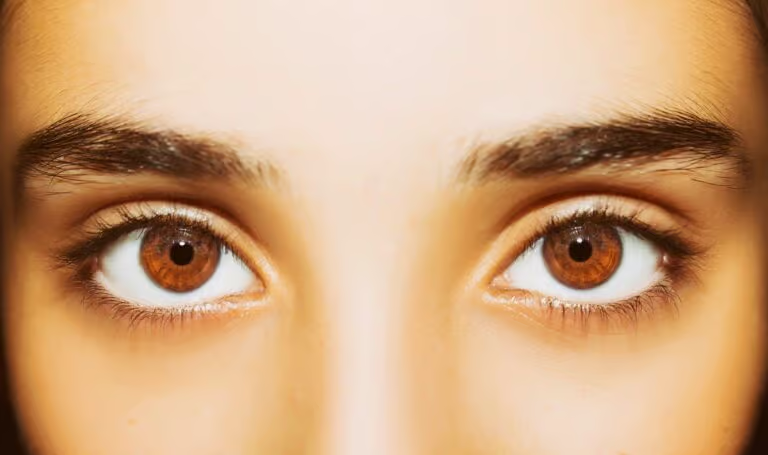
Ever glance in the mirror and notice your pupils seem unusually small, like the tip of a pin, even though the room isn’t all that bright? That tiny change, called pinpoint pupils or miosis, can spark a wave of worry, it’s your body’s quiet way of asking for a closer look. There are many reasons this might happen, and while some are harmless, others deserve serious attention, especially if substance use is involved. Understanding where these signals come from is a powerful first step, leading you toward the right kind of support and peace of mind.
What is Eye Miosis?
The medical term for pinpoint pupils is miosis. It simply means that the pupil, the black center of your eye, is unusually constricted or small. Think of your pupil like the aperture of a camera. Its main job is to control how much light enters the eye. In bright light, it naturally gets smaller to protect the retina. In the dark, it opens up, or dilates, to let more light in so you can see better. This dilation is called mydriasis, the opposite of miosis.
Normally, an adult’s pupil is about 2 to 4 millimeters in bright light. With miosis, however, the pupil shrinks to less than 2 millimeters and stays that way, even in dim lighting. This response is controlled by the body’s autonomic nervous system, which manages the pupillary light reflex without you ever having to think about it. When miosis happens without a clear reason, it’s a signal that something else might be going on.
What Are the Most Common Causes of Pinpoint Pupils?
It’s important to remember that pinpoint pupils are a symptom, not a condition on their own. They are a sign that points to an underlying cause, which can range from medications and substances to specific medical conditions or an injury. Seeing pupils this small is a key piece of the puzzle, but understanding the whole picture requires looking at what’s happening in the rest of the body. The most common causes of pinpoint pupils fall into a few main categories that we’ll explore below.
Constricted Pupils Caused by Opioids
One of the most widely recognized causes of miosis is the use of opioids. This is because these substances directly affect the part of your nervous system that controls pupil size, causing them to constrict significantly. Pinpoint pupils are a classic sign of opioid intoxication and one of the most critical symptoms of a potential overdose. If you’re concerned about substance use, learning about the signs of opioid addiction can provide clarity and guidance.
- Prescription Opioids: Medications like oxycodone, hydrocodone, and morphine can cause miosis.
- Illicit Opioids: Drugs such as heroin and illegally manufactured fentanyl are powerful opioids that lead to pinpoint pupils.
- Other Medications: Certain medications for high blood pressure, some antipsychotics, and specific types of eye drops can also cause miosis.
Horner’s syndrome
Horner’s syndrome is a rare condition that happens when a nerve pathway from the brain to the face and eye is disrupted. It isn’t a disease itself but rather a sign of another medical issue, like a stroke, tumor, or spinal cord injury. Horner’s syndrome produces a distinct trio of symptoms on one side of the face: a pinpoint pupil, a drooping eyelid, and little to no sweating. Seeing these symptoms together signals the need for medical evaluation to find the underlying cause.
Uveitis
Uveitis is a form of inflammation that affects the uvea, the middle layer of the eye. When this part of the eye becomes inflamed, it can cause the pupil to constrict. This is often accompanied by other uncomfortable symptoms like eye pain, significant redness, and blurred vision. Because uveitis can lead to serious complications if left untreated, it’s essential to see an eye doctor for proper diagnosis and care.
Head Injury
Physical trauma can also be a cause of miosis. A direct injury to the eye can damage the muscles that control the pupil, while a head injury can affect the nerves responsible for pupil function. A stroke, especially one that occurs in the brainstem, can disrupt the signals from the brain that tell the pupils what to do. In these situations, pinpoint pupils are a neurological sign that helps doctors understand the location and severity of the injury.

Check Insurance
We Accept Most Insurance
We are available 24 hours a day, 7 days a week to help you or your loved one understand your insurance coverage. 100% confidentiality guaranteed.
Symptoms Associated with Pinpoint Pupils
Because pinpoint pupils are a symptom, the other signs that appear alongside them are incredibly important. These accompanying symptoms provide the context needed to figure out what’s wrong. Paying attention to the full cluster of symptoms is key, especially in an emergency. Depending on the cause, you might notice very different signs.
- Opioid Overdose: The most critical symptoms include slow, shallow, or stopped breathing, blue or purple lips and fingernails, confusion or unresponsiveness, and making choking or gurgling sounds.
- Horner’s Syndrome: Look for a drooping eyelid and a noticeable lack of sweat on just one side of the face, accompanying the small pupil.
- Uveitis: The primary symptoms are centered on the eye itself, including redness, persistent pain, sensitivity to light, and blurred vision.
How Are Pinpoint Pupils Treated?
The treatment for miosis isn’t about fixing the pupils themselves but addressing the root cause. If the cause is a medical condition like uveitis, a doctor might prescribe corticosteroid eye drops to reduce inflammation. However, when pinpoint pupils are caused by opioid use, it’s a clear sign that help is needed for a substance use disorder. This is where real hope and recovery begin.
Seeing this symptom can be the turning point that leads to seeking support. Evidence-based programs, including outpatient and dual diagnosis treatment, offer a compassionate and effective path forward. An opioid addiction treatment program provides the structure and care needed to build a foundation for lasting recovery in a supportive, judgment-free environment.
Pinpoint Pupils and Opioid Use Disorder
One of the most recognized physical signs of opioid use disorder is pinpoint pupils. Opioids directly affect opioid receptors in the brain and brain stem, which regulate breathing, pain perception, and pupil size. When someone uses prescription opioids such as oxycodone or morphine, or illicit drugs like heroin and fentanyl, the pupils constrict dramatically.
This happens because opioids stimulate the parasympathetic nervous system, leading to pupil constriction even in dim light, when pupils would normally dilate. In medical settings, this reaction is considered a classic sign of opioid intoxication.
When Pinpoint Pupils Signal an Emergency
Pinpoint pupils alone do not automatically mean someone has opioid use disorder. However, when small pupils appear alongside slowed breathing, confusion, extreme drowsiness, or unresponsiveness, this may indicate opioid overdose.
Healthcare providers often look for three critical signs:
- Constricted pupils
- Respiratory depression
- Decreased consciousness
If these symptoms occur together, immediate medical attention is required. Opioid overdose can quickly reduce oxygen levels in the body, potentially leading to brain injury or death without rapid intervention.
The Link Between Physical Dependence and Long-Term Risk
Beyond overdose, ongoing opioid misuse can lead to physical dependence and significant changes in the central nervous system. Individuals with opioid use disorder may experience intense opioid cravings, withdrawal symptoms, and a need for higher doses to achieve the same effect.
Over time, this cycle can escalate from prescription medication misuse to illicit drug use, increasing overdose risk. Recognizing pinpoint pupils as a visible sign may serve as an early warning that substance use has progressed beyond casual or prescribed use.
Recovery Is Possible
The presence of pinpoint pupils can become a turning point. Opioid use disorder is a treatable medical condition, not a moral failure. Evidence-based treatment options such as medication-assisted treatment, counseling, and structured recovery programs significantly improve long-term outcomes.
Recognizing the signs early and seeking help can prevent life-threatening complications and open the door to sustained recovery.
When Constricted Pupils Can Indicate Opioid Use
Navigating the concerns that come with pinpoint pupils can feel overwhelming, but you don’t have to do it alone. Whether it’s for yourself or someone you care about, understanding the cause is the first step toward healing. If substance use is at the root of what you’re seeing, know that recovery is possible. The compassionate team at Woburn Addiction Treatment is here to provide the support you need. You can reach out to us for a confidential conversation by calling (781) 622-9190 or contact us today.
Sources
- StatPearls. (July 25, 2023). Pupillary light reflex. NCBI Bookshelf.
- University of Texas Medical School at Houston. (October 20, 2020). Ocular motor system (Section 3, Chapter 7). Neuroscience Online.
- StatPearls. (January 22, 2025). Opioid toxicity. NCBI Bookshelf.
- National Institute on Drug Abuse. (August 21, 2024). Drug overdose death rates. NIDA.
- Centers for Disease Control and Prevention. How and when to use naloxone for an opioid overdose. CDC.
- Illinois Department of Public Health. (November 25, 2025). Opioid overdose response. IDPH.
- National Library of Medicine. (January 5, 2023). Systematic review of clinical practice guidelines for uveitis. PubMed Central.
- U.S. Department of Health and Human Services. (March 1, 2024). Choosing a doctor: Quick tips. MyHealthfinder.


